
How to Tell if a Mole Is Dangerous
Most moles are harmless. They sit quietly on the skin for years, sometimes for life, without causing a problem. Still, because certain skin cancers can begin as a spot that looks like an ordinary mole, it is smart to know which changes are worth watching and when it is time to call a dermatologist.
The tricky part is that dangerous moles do not always look dramatic. A concerning spot may not be huge, black, or painful. Sometimes the warning sign is simply that a mole looks different than it used to, or different from the other spots on your skin.
At Benson Dermatology, many patients come in because they are not sure whether a mole is normal. That uncertainty is completely reasonable. You are not expected to diagnose your own skin, but knowing the common signs of a dangerous mole can help you decide when a professional skin exam is the right next step.
Why Paying Attention to Moles Matters
Skin changes are easy to overlook because we get used to seeing our own bodies every day. A mole on your shoulder, back, scalp, or leg may slowly become part of the background, especially if it has been there for years.
That is one reason melanoma and other skin cancers can go unnoticed early on. A spot may change little by little until, one day, it clearly looks wrong. When you build the habit of checking your skin, you are more likely to catch those changes while they are still subtle.
The goal is not to make you anxious every time you see a freckle. It is to help you notice patterns. Once you know what your normal moles look like, the unusual ones are easier to spot.
The ABCDE Rule Is a Helpful Starting Point
The ABCDE rule is one of the most common ways to remember signs of a suspicious mole. It is not perfect, and it does not replace a dermatology visit, but it gives you a simple checklist when something on your skin catches your eye.
If you drew an imaginary line through the middle of a mole, both halves of a normal mole often look fairly similar. A suspicious mole may look uneven, with one side shaped differently than the other.
Smooth, even borders are usually less concerning than edges that look jagged, blurry, scalloped, or poorly defined. When the outline of a mole seems to fade into the skin around it, or when the edge looks irregular from one area to another, it is worth having that spot checked.
Color is one of the easiest things to notice, especially when a mole starts to look darker, patchier, or less even than before.
A harmless mole is often one consistent shade of brown, tan, or flesh color. A concerning mole may contain several colors in the same spot, including brown, black, red, white, gray, or blue. Sometimes one area of the mole darkens while another area stays light, which can make the spot look uneven or mottled.
That does not mean every multi-colored mole is cancer. Some benign moles have variation, especially if they have been present for a long time. The safer rule is this: if the color is new, changing, or noticeably different from your other moles, let a dermatologist take a look.
Many people have heard that a mole larger than a pencil eraser should be checked. That is a decent guideline, and larger moles do deserve attention, especially when they are changing.
Still, size alone can be misleading. Some harmless moles are large, while some dangerous melanomas are small. Waiting for a mole to become “big enough” can create a false sense of safety.
A small mole that changes quickly, develops an uneven border, or becomes very dark should be taken seriously. A larger mole that has looked the same for many years may be less concerning, although it can still be worth monitoring during routine skin exams.
E stands for evolution, which simply means change.
A mole that grows, shrinks, darkens, lightens, becomes raised, starts itching, bleeds, crusts, or changes shape should not be ignored. This is especially true when the change happens over weeks or months rather than slowly over many years.
Patients sometimes say, “I thought I was imagining it.” Maybe the mole looked a little darker in the shower, or maybe it seemed raised when they dried off with a towel. Those small observations matter. You live with your skin every day, and if something seems different, it is reasonable to get it checked.
What Is the “Ugly Duckling” Sign?
The “ugly duckling” sign is one of the most practical ways to think about mole safety. It means one mole looks unlike the rest of your moles.
Most people have a pattern. Maybe your moles are mostly small and light brown. Maybe they are flat and round. Maybe they are darker but very even. A mole that breaks that pattern can stand out, even if it does not match every part of the ABCDE rule.
For one person, the ugly duckling might be a black spot among lighter freckles. For someone else, it might be a pink bump among darker moles. The key is not whether the mole looks scary in a textbook sense; it is whether it looks strange for you.
A New Mole in Adulthood Deserves Attention
New moles can appear when you are young, and many of them are completely normal. In adulthood, however, a brand-new mole is something to watch more carefully.
That does not mean every new spot is dangerous. Adults commonly develop sun spots, cherry angiomas, seborrheic keratoses, and other harmless growths. The problem is that not all skin growths are easy to identify at home.
If you notice a new mole after age 30, especially one that grows, changes, or looks unusual from the beginning, it is best to schedule a skin exam. You do not need to wait for it to become painful or alarming.
Bleeding or Crusting Is Not Something to Brush Off
A mole that bleeds because you scratched it, shaved over it, or caught it on clothing may have an obvious explanation. Even then, it should heal normally and stay healed.
A mole that bleeds without a clear injury is different. The same goes for a spot that crusts, scabs, opens, heals, and then opens again.
Nonhealing spots deserve special attention because skin cancer does not always look like a classic mole. It can appear as a rough patch, a shiny bump, a sore that will not close, or a small irritated area that keeps coming back. If a spot seems stuck in a cycle of healing and reopening, have it evaluated.

Does an Itchy Mole Mean Cancer?
Not always. Skin can itch for many ordinary reasons, including dryness, eczema, friction, sweat, bug bites, or irritation from clothing.
A mole under a waistband, bra strap, collar, or shaving area may become irritated simply because it gets rubbed again and again. That kind of irritation can make a mole tender or itchy, even when the mole itself is benign.
Still, an itchy mole should not be ignored if the itching persists or comes with visible changes. If the mole is also growing, bleeding, crusting, changing color, or becoming painful, it is time to get it checked.
Dangerous Moles Are Not Always Dark
A lot of people picture melanoma as a dark brown or black mole. Sometimes it is. Other times, it is not.
Some dangerous spots can be pink, red, skin-colored, or only lightly pigmented. These can be easier to overlook because they do not match the image many people have in their minds when they think of skin cancer.
That is why any changing spot matters, not just dark ones. A pale bump that grows, a pink spot that bleeds, or a patch that keeps crusting can be just as important to check as a dark mole.
A good skin check includes the places you see every day and the places you almost never see.
Look at your face, ears, neck, chest, stomach, arms, hands, legs, and feet. Then check the less obvious areas, including your back, scalp, behind your ears, between your toes, the soles of your feet, and under your nails.
The back is one of the hardest areas to monitor on your own. A hand mirror can help, but many people need help from a spouse, partner, family member, or close friend. If someone notices a changing spot on your back or scalp, take that seriously, even if you cannot see it well yourself.
For many people, checking their skin once a month is a practical routine. It does not need to be complicated or dramatic. You are simply looking for anything new, changing, or different.
Photos can make this easier, especially if you have many moles. A clear picture of your back, shoulders, legs, or another mole-heavy area gives you something to compare later. Try to use similar lighting and distance each time, because shadows and camera angles can make spots look different.
You do not have to memorize every mark on your body. Over time, you will become familiar with your usual pattern, and that makes real changes easier to notice.
Anyone can develop skin cancer, even people who tan easily or have deeper skin tones. Still, some risk factors make regular skin checks especially important.
Your risk may be higher if you have a personal or family history of melanoma, many moles, atypical moles, fair skin, frequent sunburns, tanning bed use, heavy sun exposure, or a weakened immune system.
People with darker skin should also pay attention to changing spots. Skin cancer may be less common, but it can still happen, and it may appear on the palms, soles, under the nails, or in areas that do not get much sun.
You should call a dermatologist when a mole changes, bleeds, hurts, itches for a long time, develops uneven color, grows quickly, or looks different from your other moles.
You should also schedule a visit when you simply feel unsure. That is a valid reason. You do not need to prove that a mole is dangerous before asking a dermatologist to look at it.
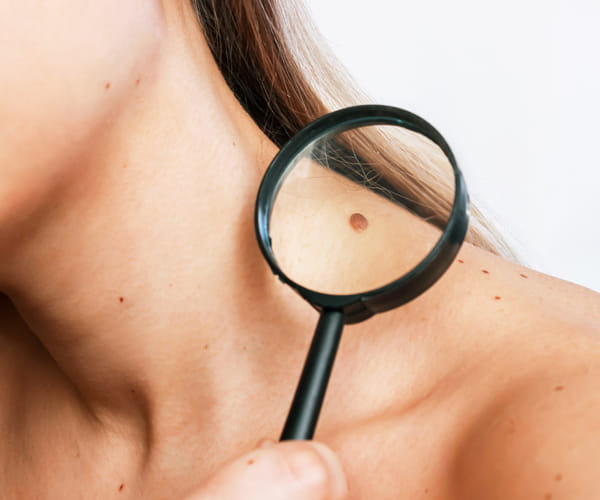
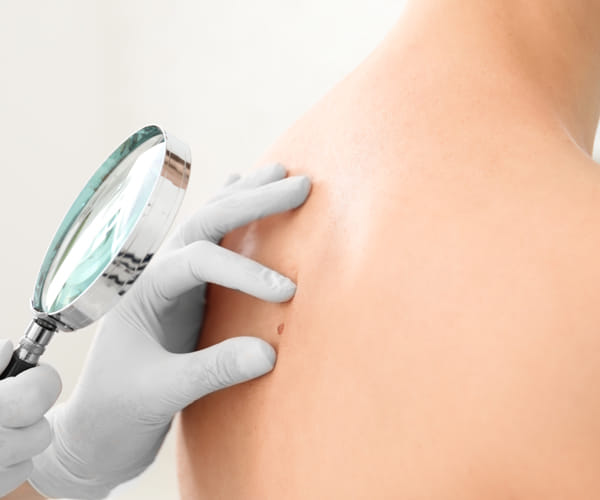
During a skin exam, your dermatologist may use a special magnifying tool to examine the mole more closely. If the spot looks harmless, it may simply be documented or watched. If it looks suspicious, a biopsy may be recommended so the tissue can be checked by a lab.
A biopsy sounds intimidating, but it is usually a straightforward office procedure. The area is numbed, a small sample is removed, and the tissue is sent for testing.
Not every biopsy means cancer. In fact, many biopsied moles turn out to be benign. The point is to get a clear answer instead of guessing.
If the results show an abnormal or cancerous spot, your dermatologist will explain the next steps. When skin cancer is found early, treatment is often more manageable, which is one of the biggest reasons not to delay an exam.
Early Detection Is the Best Reason to Speak Up
A mole does not have to look terrible before it deserves attention. Small changes can matter.
If you notice something different, mention it. If a family member points out a spot on your back, do not dismiss it. If a mole keeps catching your attention every time you shower or get dressed, that alone may be a sign that it is worth checking.
The best-case scenario is that your dermatologist tells you the mole is harmless. That is not a wasted appointment. That is peace of mind.
Benson Dermatology Can Help You Get Answers
Trying to decide whether a mole is dangerous can be stressful, especially when online photos make every spot seem either harmless or terrifying. Real skin does not always fit neatly into those examples.
Benson Dermatology helps patients evaluate changing moles, unusual skin spots, and other concerns with careful, patient-focused dermatology care. If you have a mole that is new, changing, bleeding, itching, or simply different from the rest, scheduling a skin exam is a simple way to protect your health and get a clearer answer.
Footer Navigation


Areas Served
Our Services
Our Practice
*Individual results may vary. Photography contains a mix of actual patients and stock photography. Testimonials are from actual patients.