
Why You Still Have Acne in Your 30s and 40s
Acne is often treated like something you are supposed to leave behind with high school yearbooks and teenage awkwardness, which can make it especially frustrating when breakouts continue well into your 30s or 40s. You may have spent years expecting your skin to eventually “grow out of it,” only to discover that pimples still appear along your chin, jawline, cheeks, forehead, or even your neck at the least convenient times.
Adult acne is far from unusual, however, and it does not necessarily mean that you are doing something wrong with your skin care. Hormones, genetics, stress, medications, skin products, and changes in the way your skin produces and sheds oil can all contribute to breakouts later in life. Understanding why acne persists is important because the products and routines that seemed reasonable during your teenage years may not be the best approach for adult skin.
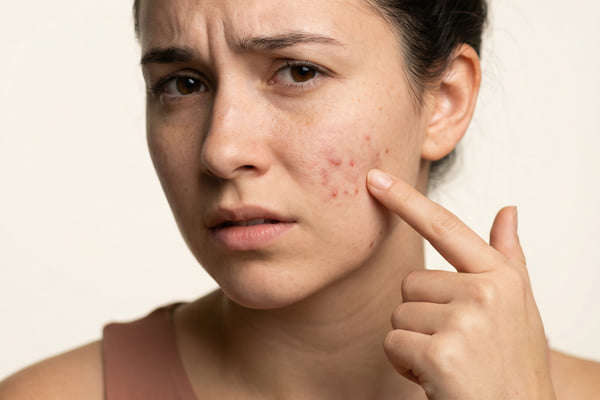
Adult Acne Is More Common Than Many People Realize
Acne can affect people at virtually any stage of adulthood. Some adults have dealt with breakouts continuously since adolescence, while others enjoy years of relatively clear skin before acne unexpectedly returns. There are also people who develop significant acne for the first time in their 30s or 40s, despite having experienced few problems during their teenage years.
Adult acne can look somewhat different from classic teenage acne. Breakouts frequently appear around the lower face, including the chin and jawline, although they can develop almost anywhere. Some people experience clusters of small clogged pores, while others develop deeper, inflamed bumps that remain tender for days or weeks. Because mature skin may also be dealing with dryness, sensitivity, pigmentation changes, or early signs of aging, treating these breakouts can become more complicated than simply reaching for the strongest acne product available.
Why Can Hormonal Changes Cause Acne in Adults?
Hormones play a major role in controlling the activity of the sebaceous glands, which produce the oily substance known as sebum. When hormonal signals encourage these glands to produce more oil, pores may become more likely to clog. Once excess oil combines with dead skin cells inside the follicle, conditions can develop that contribute to inflammation and acne lesions.
Hormonal fluctuations can continue long after puberty ends. Menstrual cycles, pregnancy, stopping or starting certain forms of birth control, perimenopause, and other hormonal changes can influence breakouts in some adults. Acne associated with hormonal activity commonly develops around the chin and jawline, although location alone cannot tell you exactly what is causing a breakout.
Persistent acne may occasionally be associated with an underlying hormonal condition, particularly when other symptoms are present. A dermatologist can evaluate the pattern of your breakouts and, when appropriate, determine whether additional medical evaluation should be considered rather than assuming that every case of adult acne has the same cause.
Your Skin Can Still Produce Too Much Oil
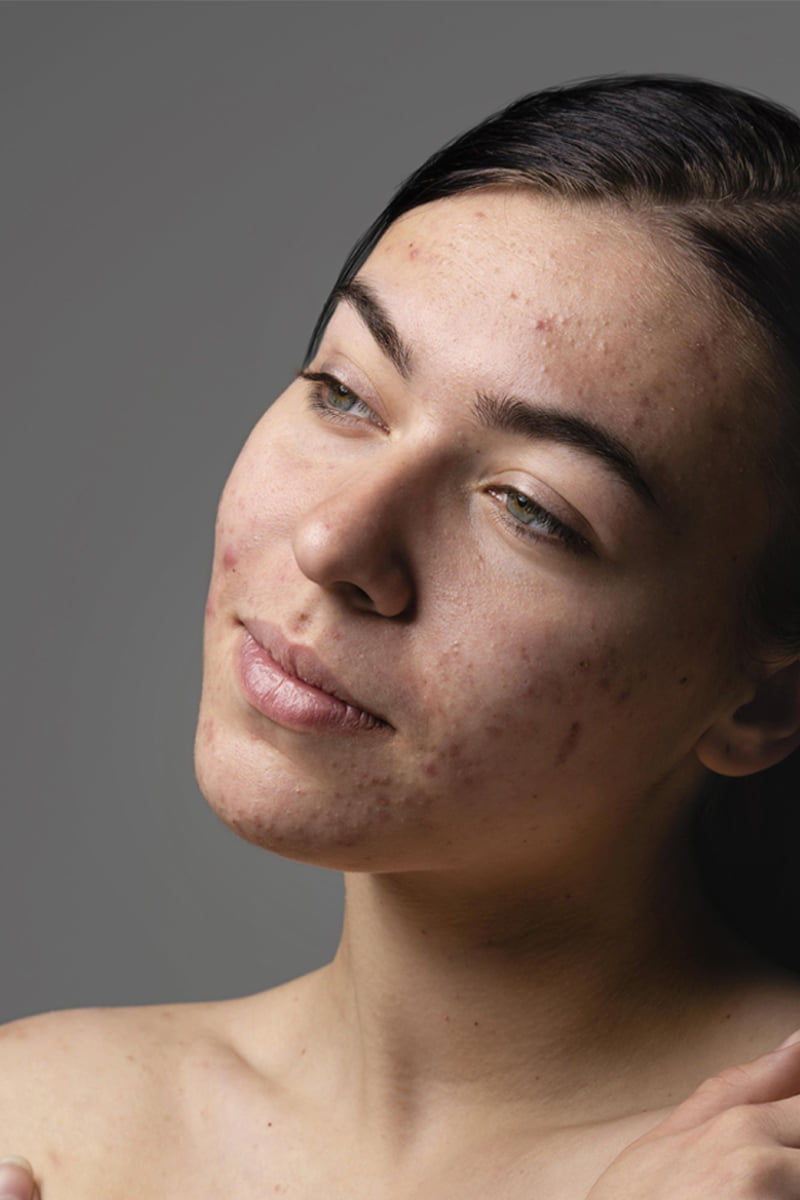
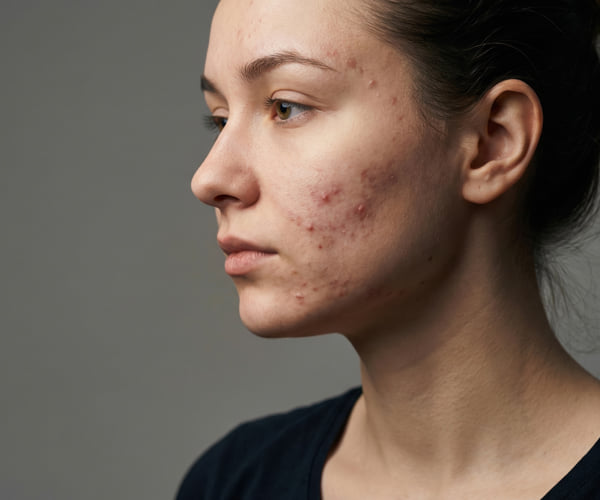
Many people assume oily skin gradually disappears with age, yet sebaceous glands do not simply shut down once you reach adulthood. Genetics and hormones continue to influence how much oil your skin produces, which means someone who had naturally oily skin at 18 may still struggle with excess sebum decades later.
Oil itself is not the enemy, since healthy skin needs sebum to help maintain its protective barrier. Problems tend to develop when oil, dead cells, and other material accumulate inside a follicle. Trying to eliminate every trace of oil by aggressively washing or drying the skin can sometimes create additional irritation without addressing the underlying reason that pores are becoming clogged.
Stress May Show Up on Your Skin
Stress does not single-handedly create every pimple, but the relationship between stress and acne is more than a convenient explanation for a badly timed breakout. Stress affects numerous biological processes, including hormonal and inflammatory pathways that can influence the skin. For someone who is already prone to acne, periods of sustained stress may contribute to worsening symptoms.
Adult life also provides no shortage of potential stressors. Work responsibilities, financial concerns, family obligations, poor sleep, and changing schedules can overlap for months at a time. When breakouts become worse during these periods, people sometimes respond by changing several skin-care products simultaneously, which can make it difficult to determine whether the acne is changing naturally or reacting to something new.
Stress management should not be treated as a substitute for appropriate acne treatment, especially when breakouts are painful or persistent. It can, however, be one part of a broader strategy for managing factors that may aggravate acne.
Could Your Skin-Care Routine Be Making Things Worse?
A complicated skin-care routine is not automatically a better one. Adults sometimes combine cleansers, exfoliating acids, scrubs, retinoids, masks, spot treatments, serums, and anti-aging products without realizing that several ingredients may be irritating the skin at the same time. When the skin barrier becomes irritated, redness and inflammation can make an existing acne problem appear even worse.
Overwashing can create similar problems. Scrubbing your face repeatedly does not clean acne out of the pores, and acne is not caused by having dirty skin. Aggressive cleansing may instead leave the skin dry, tight, or irritated, particularly when it is combined with medications or ingredients that already increase dryness.
The opposite problem can occur when products are too heavy for acne-prone skin. Certain cosmetics, sunscreens, moisturizers, hair products, and styling products may contribute to clogged pores in susceptible people. Choosing products labeled noncomedogenic or formulated for acne-prone skin can be helpful, although even those labels cannot guarantee that every product will work equally well for everyone.
Adult Skin Requires a Different Balance
Treating acne in your 30s or 40s can require more finesse than treating it during adolescence because your skin may have several competing needs. You might be concerned about pimples and clogged pores while simultaneously noticing dryness, fine lines, uneven tone, or increased sensitivity.
Using increasingly harsh treatments in an attempt to control acne can therefore become counterproductive. An overly aggressive routine may improve oiliness while making dryness and irritation considerably worse. Successful adult acne treatment often involves finding a balance that addresses clogged pores and inflammation while protecting the skin barrier.
That balance varies from person to person. Someone with very oily, resilient skin may tolerate treatments that would be excessively irritating for someone whose skin has become dry or sensitive with age.
Makeup does not automatically cause acne, and many people with acne-prone skin can comfortably wear cosmetics every day. Problems can arise, however, when particular products clog pores, irritate the skin, or remain on the face longer than intended.
Cleaning makeup brushes and applicators regularly can also be useful, since these tools accumulate product residue, oil, and debris over time. Removing makeup before bed gives you an opportunity to gently cleanse the skin and apply any nighttime treatments recommended as part of your acne routine.
There is no need to abandon cosmetics completely simply because you develop acne. Paying attention to how your skin responds to individual products is usually more practical than assuming that all foundation, concealer, or other makeup is harmful.
Certain medications can produce acne or acne-like eruptions in some people. Because adults are more likely than teenagers to take prescription medications regularly, reviewing your medication history can become an important part of investigating a new or unusual breakout.
That does not mean you should stop a medication because you suspect it is affecting your skin. Suddenly discontinuing a prescription can be dangerous depending on what the medication treats. Instead, mention the timing and appearance of your breakouts to your dermatologist and the clinician who prescribed the medication so they can determine whether there may be a connection and what alternatives, if any, are appropriate.
The old idea that eating a single chocolate bar automatically causes pimples is far too simplistic, but researchers have continued studying whether broader dietary patterns may influence acne. Certain diets, particularly those containing large amounts of rapidly absorbed carbohydrates, have been associated with acne in some studies, while specific dairy products have also received research attention.
Diet is only one potential factor, however, and responses can differ substantially between people. Severely restricting your diet in pursuit of perfect skin is unlikely to be a reasonable first step, particularly when proven acne treatments are available.
If you notice a consistent relationship between a particular food or dietary pattern and your breakouts, discussing it with a dermatologist may be more useful than following generalized acne diets found online.
Inflamed acne can take time to resolve because the visible bump represents an inflammatory process occurring within and around the hair follicle. Deeper lesions may remain noticeable even after tenderness decreases, and discoloration can persist long after the active acne itself has healed.
Repeatedly squeezing or picking at pimples can extend that process. Picking increases inflammation and may damage surrounding tissue, which can increase the likelihood of lingering dark marks or permanent scars.
This is one reason early control of persistent acne matters. Preventing new inflammatory lesions is generally easier than treating years of accumulated scarring after the fact.
Once a breakout disappears, you may be left with a flat red, pink, brown, or darker spot where the pimple used to be. These marks are changes in pigmentation or redness rather than true scars, although they can remain visible for months and understandably feel just as frustrating.
Acne scars involve an actual change in the texture or structure of the skin. Some appear as depressions, while others can become raised. Treatment options vary depending on the type of scar, which is why determining exactly what you are seeing is important before choosing a treatment.
Controlling active acne typically comes first. Continuing to develop new inflammatory lesions while treating old scars can make long-term improvement considerably more difficult.
When Should You See a Dermatologist for Adult Acne?
An occasional isolated pimple does not necessarily require medical treatment. Acne that repeatedly returns, causes painful cysts or nodules, leaves scars, produces persistent discoloration, or does not respond to over-the-counter products deserves a closer look.
You also do not have to wait until acne becomes severe before making an appointment. Adults often spend years cycling through different products because they assume their acne is not “bad enough” for dermatology care. Earlier evaluation can help identify what type of acne you have, possible contributing factors, and which treatments make the most sense for your skin.
A dermatologist can also distinguish acne from conditions that sometimes resemble it. Red bumps around the mouth, nose, or eyes, for example, may have a different cause and require a different treatment strategy.
Professional Treatment Can Target the Cause of Your Acne
Dermatologists have several approaches available for treating adult acne, and treatment can be adjusted according to the type and severity of your breakouts. Options may include topical retinoids, benzoyl peroxide, certain topical or oral antibiotics, hormonal treatments for appropriate patients, and other prescription therapies.
The best treatment is not necessarily the strongest medication. Your dermatologist considers factors such as the types of acne lesions you develop, how sensitive your skin is, whether scarring is occurring, medications you currently take, and treatments you have already tried.
Improvement also takes time. Acne medications generally work by influencing the processes that create future breakouts, which means several weeks or longer may pass before the full benefit becomes apparent. Consistency is often more productive than repeatedly switching products whenever a new pimple appears.
Clearer Skin Is Possible at Any Age
Having acne in your 30s or 40s can be especially irritating because you may feel as though you already served your time dealing with breakouts years ago. Adult acne, however, is a legitimate skin condition rather than a sign that you have failed to wash your face correctly or find the perfect skin-care product.
Finding the reason your acne persists can make treatment considerably more effective. Whether hormones, clogged pores, inflammation, skin-care products, medications, or several factors are involved, a treatment plan should address what your skin needs now rather than relying on the routine that worked when you were younger.
If adult acne continues to return despite your efforts at home, the team at Benson Dermatology can evaluate your skin, identify factors that may be contributing to your breakouts, and recommend treatment options tailored to your needs. You do not have to keep experimenting with products indefinitely or simply accept persistent acne as part of getting older. With the right approach, it is possible to control breakouts while caring for the other changes your skin experiences in your 30s, 40s, and beyond.
Footer Navigation


Areas Served
Our Services
Our Practice
*Individual results may vary. Photography contains a mix of actual patients and stock photography. Testimonials are from actual patients.